Farm Grandpa Tractor: A Designer’s Review
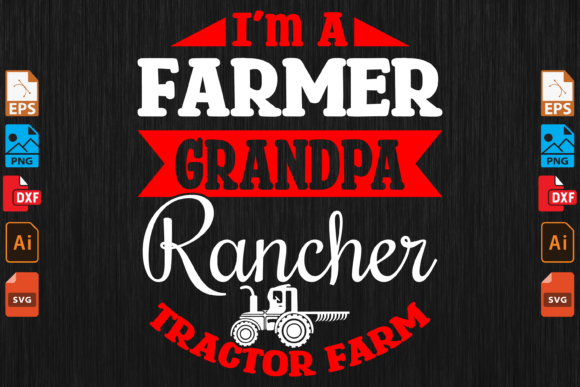
As an embroidery designer who has spent years digitizing patterns and testing them on everything from stiff denim to delicate baby knits, I approach every new Graphic Templates release with a critical eye. We are not just looking for pretty pictures; we are looking for stitchability, durability, and market appeal. Recently, I evaluated the design titled I m a Farmer Grandpa Rancher Tractor. This piece, offered by the mrrana62783 team, presents itself as a quote typography or SVG-Print vector template. While the source description mentions its utility for t-shirts, book covers, and mugs in personal use POD scenarios, my focus was strictly on how this asset translates into a tangible, high-quality machine embroidery design for real-world craft business applications.
First Impressions and Visual Mood
The immediate impression of I m a Farmer Grandpa Rancher Tractor is one of rustic warmth and familial pride. The combination of agricultural imagery with the "Grandpa" title taps into a powerful emotional niche. Visually, the layout suggests a balance between bold typography and iconic imagery. For an embroiderer, this is promising because it implies clear shapes rather than muddy, indistinct gradients. The mood is celebratory yet grounded, making it ideal for gifts that honor hard work and family heritage. However, as a reviewer, I look past the screen image. I ask myself: will those tractor wheels hold their shape under tension? Will the lettering remain legible after fifty washes? These are the questions that separate a amateur hobbyist project from a professional finished product.
Real-World Application Scenarios
To truly test the viability of this design, I imagined several specific production scenarios. The most natural fit is undoubtedly sweatshirt embroidery. A heather grey or navy crewneck featuring this design on the left chest or centered on the back would sell well in boutique shops. The sturdy nature of sweatshirt fabric supports the likely density of a tractor graphic, preventing puckering if proper technique is used.
Another strong candidate is the tote bag design. Canvas totes are popular among eco-conscious shoppers and make excellent vehicles for bold, statement graphics. Here, the contrast between the thread colors and the natural fabric texture becomes crucial. If the design relies on subtle shading, it might get lost on unbleached canvas. However, if the vector lines are clean and the color blocking is distinct, it creates a striking handmade product that stands out at craft fairs.
I also considered baby embroidery projects, such as onesies or bibs. While the theme is "Grandpa," these items are often purchased by parents as gifts for the grandfather. In this context, scale is everything. The design must be resized significantly without losing integrity. Tiny details in the tractor’s cabin or the farmer’s hat could become problematic if the hoop size is reduced too much, leading to thread breaks or poor registration.
Technical Considerations for Stitching
When converting a vector or print template into an embroidery file, one must consider stitch types. A tractor design typically benefits from a mix of fill stitch for the body of the vehicle and satin stitch for borders or text. If the original I m a Farmer Grandpa Rancher Tractor asset is purely a line-art SVG, the digitizer must decide where to add density. Over-digitizing can lead to a stiff, cardboard-like feel, which is undesirable on apparel. Under-digitizing risks gaps in the fabric showing through.
Stitch density is a major concern with mechanical subjects like tractors. Straight lines and geometric shapes require precise tension settings. I recommend testing the design on scrap fabric first, specifically using the same material intended for the final product. Check thread color contrast carefully; a dark green tractor on a black shirt will vanish. Use proper stabilizer—a cut-away stabilizer is often best for stretchy fabrics like t-shirts, while tear-away may suffice for stable woven cottons used in tea towels or aprons.
Be cautious with curved surfaces like caps. Embroidering a wide tractor graphic on a structured cap requires careful hooping and potentially splitting the design if it exceeds the standard hoop dimensions. Always confirm hoop size compatibility before starting. If the design includes tiny lettering, inspect it closely. Small serifs or thin lines can easily bunch up or break during high-speed stitching.
Market Appeal and Brand Consistency
For Etsy sellers and small shop owners, the visual appeal of a design directly impacts buyer engagement. I m a Farmer Grandpa Rancher Tractor has strong giftability. It targets a specific demographic: families who value rural life and multi-generational bonds. This specificity builds customer trust because it feels personalized and thoughtful, not generic. When used in commercial embroidery projects, consistency is key. Ensure that the thread colors you choose align with your brand’s palette. A cohesive look across your design assets helps build recognition.
Creating printable mockups is an essential step before listing items. Show the design on various backgrounds to help customers visualize the personalized gift. Compare light and dark fabric backgrounds in your photos. A design that pops on white might need adjustment for dark garments, perhaps requiring an underlay stitch or a change in thread hue to maintain visibility.
Practical Designer Notes
Before committing to a large production run or listing this as a digital product, adhere to these practical steps:
- Test on Scrap Fabric: Never stitch directly on your final garment. Test tension, density, and color interaction on a similar scrap piece.
- Check Licensing: The product description mentions "personal use POD." If you intend to sell physical items or the digital embroidery file itself, you must clarify the license terms with the creator. Do not assume commercial rights are included.
- Inspect Small Details: Zoom in on the vector file. Are there stray nodes? Are the curves smooth? Clean up the file before digitizing to ensure a smoother path for the needle.
- Verify File Formats: The description lists SVG and Vector templates. Ensure you have the correct format for your digitizing software or embroidery machine. Common machine formats include PES, DST, and EXP, which may need to be generated from the vector source.
- Evaluate Wash Durability: After stitching a test sample, wash and dry it. Check for thread shrinkage, fabric distortion, or color bleeding. This step is vital for maintaining professionalism and customer satisfaction.
In conclusion, I m a Farmer Grandpa Rancher Tractor offers a charming aesthetic with strong potential for custom apparel and home decor. Its success in embroidery depends entirely on thoughtful digitization, appropriate material selection, and rigorous testing. For the experienced maker, it is a versatile asset that, when handled with care, can elevate a simple item into a cherished keepsake. Whether you are creating an embroidered patch for a jacket or a holiday gift for a beloved grandfather, this design invites creativity but demands technical precision. Treat it with the respect it deserves, and it will serve your craft business well.