Girl Mom: A Retro Embroidery Design Review
As a designer who has spent countless hours digitizing and stitching out files for clients, I have learned that not every graphic translates well to thread. When I first encountered the Girl Mom design, my initial reaction was one of cautious optimism. The retro aesthetic is undeniably popular right now, especially in the Crafts and Graphics sectors, but popularity does not always equal stitchability. I wanted to see if this specific quote-based design could hold up under the needle when applied to real-world products.
The description promises a vector file in CMYK and RGB modes, which is excellent for printing, but for us embroidery professionals, the journey from screen to fabric requires a different set of eyes. I approached this review by imagining a typical scenario: a busy Etsy seller preparing a batch of custom sweatshirts for Mother’s Day. Would this design save them time, or would it cause headaches during production?
First Impressions and Visual Personality
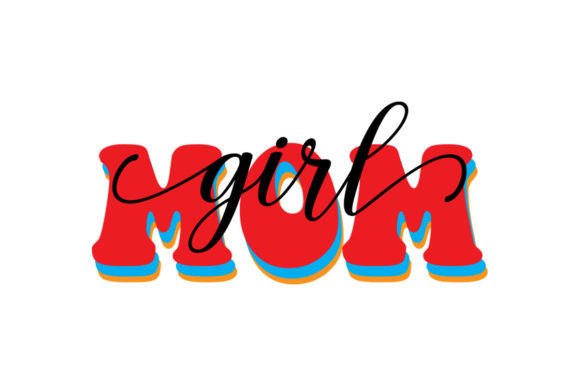
The mood of the Girl Mom design is warm, nostalgic, and bold. It captures that specific cultural moment where motherhood is celebrated with a touch of vintage flair. Visually, the layout feels balanced, with the typography taking center stage. For an embroidery project, this is crucial. Complex illustrations often get lost in the texture of fabric, but strong typographic statements tend to read clearly even from a distance.
What stands out immediately is the potential for color play. Since the source file allows for easy modification of colors, you are not locked into a single palette. This flexibility is vital for creating a cohesive handmade product line. You might choose soft pastels for baby embroidery or vibrant, contrasting thread colors for a streetwear-inspired tote bag design. The visual personality suggests versatility, fitting seamlessly into both nursery decor and casual adult apparel.
Real-World Application on Fabric
To truly evaluate this design, I considered how it would perform on various substrates. Let’s look at a custom embroidered sweatshirt. Sweatshirts provide a stable, thick canvas that can handle moderate stitch density without puckering. The retro font style of Girl Mom would likely look fantastic here, using a combination of satin stitch for smaller elements and fill stitch for larger letters to create texture and depth.
However, moving to a lighter fabric, such as a cotton tote bag or a kitchen towel, changes the game. On these materials, the backing stabilizer becomes your best friend. Without proper stabilization, the weight of the thread could distort the fabric, ruining the clean lines of the quote. For a personalized gift like a baby onesie, you must be mindful of comfort. Dense stitching can feel stiff against sensitive skin, so adjusting the stitch density or opting for a lighter fill pattern is a smart move.
I also envisioned this design on an embroidered patch. Patches are durable and allow for high-density stitching without worrying about garment distortion. A Girl Mom patch could be a hot seller at craft fairs, offering customers a way to customize their own jackets or bags later. This adaptability makes it a strong candidate for small shop products that need to appeal to a broad audience.
Navigating Technical Challenges
While the design is appealing, there are areas where caution is necessary. Any text-based embroidery file requires careful attention to legibility. If you scale the Girl Mom design down for a small hoop size, such as a 4x4 inch hoop for a cap or a pocket detail, the thinner strokes of the retro font might become too delicate. Thread has thickness, and tiny details can merge together, turning readable text into a blurry mess.
Textured fabrics present another challenge. If you are stitching on a waffle-knit towel or a fuzzy fleece blanket, the pile of the fabric can hide fine details. In these cases, increasing the contrast between the thread colors and the fabric background is essential. Dark thread on dark fabric is a common mistake that leads to poor visibility. Always test your design on scrap fabric first, ideally in black and white, to check for clarity before committing to your final thread colors.
Curved surfaces, like baseball caps, require special consideration. The design needs to be centered perfectly, and the curvature can distort the perception of straight lines. Using a cap frame and ensuring the design is not too wide will help maintain its integrity. Additionally, for items that will undergo frequent washing, such as aprons or tea towels, secure anchoring stitches are vital to prevent unraveling over time.
Enhancing Brand Value and Customer Trust
For the commercial embroidery professional, the quality of your design assets directly impacts your brand consistency. A crisp, well-executed Girl Mom embroidery signals professionalism. It tells the customer that you care about the details. When buyers see a clean finish with no loose threads or distorted shapes, their trust in your handmade product increases. This is particularly important for holiday embroidery gifts, where the emotional value is high, and expectations for perfection are even higher.
Using this design in your digital embroidery file library can also streamline your workflow. Since the source is a vector EPS file, you have the freedom to adjust sizes and colors to match specific client requests without losing quality. This ease of modification is a significant advantage for custom apparel businesses that need to turn around orders quickly. It allows you to offer personalized products without starting from scratch every time.
Practical Notes for the Embroiderer
Before you load this design into your machine, take a moment to review the technical specifics. The product description mentions vector files, which are great for printing and scaling, but ensure you have the correct embroidery file format for your specific machine. Check whether the design has been digitized with appropriate underlay stitches to stabilize the top stitching.
- Test on Scrap: Always run a test stitch-out on similar fabric to check tension and density.
- Check Contrast: Ensure your thread colors stand out against the fabric texture.
- Verify Hoop Size: Confirm the design fits comfortably within your hoop, leaving room for stabilization.
- Licensing Check: Since this is a commercial asset, verify the license terms to ensure you can sell finished items or use it in digital product previews.
- Stabilizer Choice: Use cut-away stabilizer for stretchy fabrics and tear-away for stable woven materials.
In conclusion, the Girl Mom design offers a stylish, retro vibe that resonates with current trends. It is well-suited for a variety of embroidery projects, from sweatshirt embroidery to boutique branding. By paying attention to stitch density, fabric choice, and proper stabilization, you can transform this digital asset into a high-value finished product. Whether you are an experienced designer or a hobbyist looking to expand your craft business, this design provides a solid foundation for creating memorable, personalized gifts.