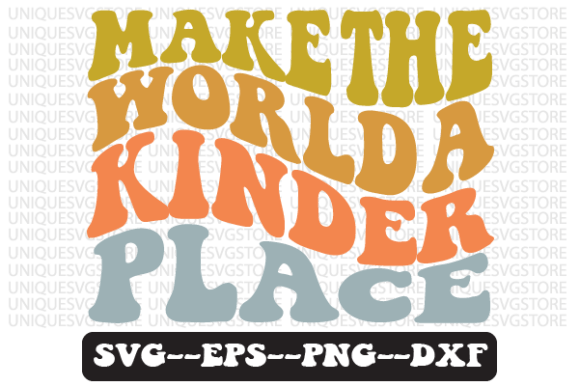
Review: Make the World a Kinder Place SVG for Embroidery
As a designer who spends half my life staring at digitized files and the other half watching needles punch through fabric, I have developed a keen eye for what works in the hoop versus what only looks good on a screen. When I first encountered the Make the World a Kinder Place Svg Design, my initial reaction was one of cautious optimism. The phrase itself carries weight, but in the world of Crafts and commercial Graphics, sentiment alone does not sell products. Execution does.
This design features a wavy, retro aesthetic that immediately sets a specific mood. It is not rigid or corporate; it feels organic, friendly, and approachable. For those of us running small shops or selling on platforms like Etsy, finding designs that balance trendiness with timeless appeal is crucial. This particular file promises versatility, marketed as a printable PNG for sublimation and an SVG for cutting, but my focus here is strictly on how it translates to thread. Can a vector-based retro wave hold up under the tension of a sewing machine? Let’s dig into the practical realities.
First Impressions and Visual Personality
The layout of the Make the World a Kinder Place Svg Design relies heavily on flow. The wavy typography suggests movement, which is excellent for visual interest but challenging for stitching. In embroidery, sharp corners and extreme curves can cause thread breaks or puckering if not handled correctly. The retro vibe implies a certain boldness, likely requiring solid fill stitches rather than delicate running stitches to maintain legibility.
When I visualize this on a tote bag design or a heavy cotton sweatshirt, the thickness of the letters becomes the primary concern. If the original SVG has thin strokes, they may disappear into the fabric texture or require excessive density to become visible, which leads to stiffness. A successful embroidery project starts with understanding that thread has volume. This design needs to be robust enough to stand out without turning the garment into a cardboard shield.
Real-World Application: The Custom Sweatshirt Test
To truly evaluate this asset, I imagined a real-life scenario: a custom order for a local boutique specializing in positive affirmation apparel. The client wanted a unisex sweatshirt embroidery piece that felt modern yet cozy. Placing the Make the World a Kinder Place Svg Design across the chest of a mid-weight fleece hoodie seemed like the ideal test case.
In this context, the wavy nature of the text helps break up the monotony of standard block lettering. It adds a playful element that appeals to a younger demographic while retaining the wholesome message parents look for in baby embroidery or family gifts. However, the curvature means I would need to pay close attention to the stitch density. Too dense, and the fabric pulls; too light, and the backing shows through. For a project like this, I would recommend using a cut-away stabilizer to support the weight of the thread, ensuring the finished product remains soft and wearable.
Versatility Across Product Lines
Beyond apparel, this design has potential in home decor. Imagine it stitched onto a linen pillow cover or a sturdy canvas apron. The retro style pairs beautifully with natural fibers, creating a high-end, handmade look that justifies a higher price point. For Etsy sellers, this versatility is key. You are not limited to one niche. You can market the same digital embroidery file concept to teachers, nurses, and parents by simply changing the base product.
However, caution is needed when applying this to curved surfaces like caps. The wave pattern might distort if not centered perfectly on the front panel. Similarly, on thin fabrics like onesies, the design must be scaled down significantly to avoid overwhelming the small garment. Always check the scale before hitting "start" on your machine.
Technical Considerations for Stitching
Since the source file is described as an SVG and PNG, it is vital to understand that these are not native machine embroidery design formats like DST or PES. You will need to use digitizing software to convert the vector paths into stitch data. This is where your skill as a designer comes into play. Do not rely on auto-digitize functions for complex waves. Manually adjust the stitch angles to follow the curve of the letters. Use satins stitch for smaller elements and fill stitch for larger blocks, ensuring a smooth transition between the two.
Thread color choice is another critical factor. For a retro look, consider muted tones like mustard yellow, teal, or burnt orange against cream or navy fabrics. High contrast is essential for readability. Before committing to a final custom apparel piece, always run a test on scrap fabric. Check for thread breaks at the tightest curves and ensure the hoop size is adequate to capture the full width of the wavy text without re-hooping.
Navigating Limitations and Best Practices
While the Make the World a Kinder Place Svg Design is visually appealing, it is not without limitations. Tiny details in the retro font may get lost if the design is scaled down too far for an embroidered patch or a pocket logo. In such cases, simplify the design or increase the stroke width. Additionally, dark fabrics require careful planning. If you are stitching light thread on black fabric, you may need an underlay stitch to prevent the background from showing through the gaps in the fill.
For those interested in commercial embroidery, always verify the licensing terms of the original graphic. While SVGs are often sold for personal use, commercial rights for physical goods vary. Ensure you have the right to sell items made with this design. Furthermore, if you are offering this as a printable mockup or digital asset, confirm that the resolution of the PNG is high enough for large-format printing.
Final Verdict for Craft Entrepreneurs
The Make the World a Kinder Place Svg Design offers a strong foundation for meaningful, marketable products. Its retro wave style taps into current trends while delivering a message that resonates emotionally. For the experienced maker, it presents a fun technical challenge in managing curves and density. For the beginner, it serves as a reminder that preparation—proper stabilizer, correct thread tension, and thoughtful color selection—is just as important as the design itself.
Whether you are creating a personalized gift for a friend or stocking your small shop product line, this design can elevate your offerings. Just remember to treat the SVG as a starting point, not the final stitch plan. With careful digitizing and attention to fabric texture, you can transform this graphic into a tactile, durable piece of art that truly makes the world a kinder place, one stitch at a time.