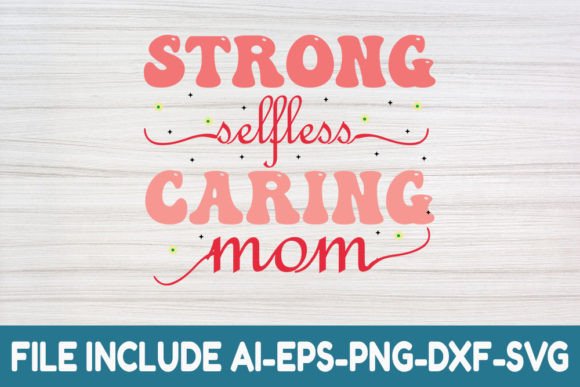
Review: Strong Selfless Caring Mom Embroidery Design
As a designer who spends more time staring at stitch maps than actual fabric, I have learned to be skeptical of generic holiday graphics. The market is flooded with text-heavy designs that look crisp on a screen but turn into a tangled mess under the needle. When I first pulled up the Strong Selfless Caring Mom - Mother Day file set, my initial reaction was cautious optimism. The phrase itself carries weight, and the typography needs to reflect that emotional resonance without sacrificing technical feasibility.
This review is not just about whether the design looks pretty in a digital mockup. It is about how this asset performs when you are trying to meet a deadline for a custom order, how it holds up after three washes, and whether it adds genuine value to your craft business inventory. Let’s break down the practical realities of using this graphic in real-world embroidery projects.
First Impressions and Visual Personality
The immediate mood of the Strong Selfless Caring Mom - Mother Day design is warm yet grounded. It avoids the overly frilly or childish aesthetics that often plague Mother’s Day graphics, which makes it versatile. For an experienced eye, the layout suggests a balance between bold statement lettering and decorative elements that do not overwhelm the text. This is crucial because legibility is the first casualty in poor digitizing.
When evaluating the visual personality, I look for how the design translates across different mediums. Since this package includes SVG, PNG, EPS, and DXF formats, it is clearly positioned as a multi-use asset within the Crafts and Graphics categories. However, for those of us focusing on thread work, the vector files (SVG, EPS, DXF) are primarily useful for creating cut files for applique bases or for reference when manually digitizing complex shapes if the native embroidery file is not provided in the specific format your machine requires. Always verify the exact embroidery file formats included in the zip before purchasing if you need direct machine compatibility.
Real-World Application: The Custom Tote Test
To truly test a design, you must imagine it on a challenging surface. I visualized this design on a heavy canvas tote bag, a popular item for Etsy sellers during the spring rush. Canvas has a distinct texture that can swallow fine details. The bold nature of the "Strong Selfless Caring Mom" text works in its favor here. Thicker strokes mean better coverage and less risk of the fabric showing through the stitches.
If I were producing this for a small shop product, I would lean towards a satin stitch for the main lettering to give it a premium, raised feel. The word "Selfless" might require careful attention to stitch direction to ensure the curves remain smooth. For a sweatshirt embroidery project, the same design would benefit from a fill stitch approach if the letters are large enough, providing a soft, plush texture that customers love in personalized gifts. The key is matching the stitch type to the fabric texture. A dense fill on a thin t-shirt will cause puckering, while a light running stitch on a thick towel might get lost.
Navigating Technical Constraints
Every design has its limits. With Strong Selfless Caring Mom - Mother Day, the primary concern is scale. If you attempt to shrink this design for a baby embroidery project, such as a onesie or a small hat, you risk losing the integrity of the finer serifs or decorative swashes. Small hoop sizes demand simplicity. I would advise against using this full phrase on anything smaller than a 4x4 inch hoop unless you are significantly simplifying the digitizing or removing decorative elements.
Dark fabrics present another challenge. If you are stitching this onto a navy blue apron or a black cap, thread color contrast becomes critical. A standard white or pastel thread will pop, but you must ensure your stitch density is high enough to cover the dark background completely. Otherwise, the underlying fabric will peek through, making the finished product look amateurish. Always test on scrap fabric first. Check your tension and stabilizer choice. A cut-away stabilizer is usually safer for stretchy fabrics like sweatshirts, while a tear-away might suffice for stable woven cottons.
Commercial Viability and Brand Consistency
For commercial embroidery and digital product sellers, consistency is king. This design fits well into a boutique branding strategy that values emotional connection over trendy flashiness. It appeals to buyers looking for meaningful holiday embroidery rather than just seasonal decor. When used in printable mockups or digital embroidery file previews, the clean lines of the source graphics help create professional-looking listings that build customer trust.
However, before listing this as a finished product or a digital download, you must confirm licensing terms. Just because you receive a zip file with various formats does not automatically grant unlimited commercial rights. Check the documentation included in the download. If you are an Etsy seller, ensuring you have the right to sell items made with this design is non-negotiable. It protects your shop from intellectual property disputes and ensures long-term viability.
Practical Designer Notes
- Test Stitch First: Never run a full production batch without sewing out one sample. Check for thread breaks and nesting.
- Color Contrast: Review the design in black and white to ensure the shape remains recognizable without color cues.
- Stabilizer Selection: Match your stabilizer to the fabric weight. Heavy designs need strong support to prevent distortion.
- Hoop Size Verification: Ensure the design dimensions fit your available hoops, especially for curved surfaces like caps.
- File Format Check: Confirm that the zip file contains the specific machine embroidery format your device reads, as SVG and DXF are not directly stitchable by most home machines without conversion.
Final Verdict on Usability
The Strong Selfless Caring Mom - Mother Day design is a solid contender for spring and holiday collections. Its strength lies in its emotional clarity and robust structure, which translates well to medium-to-large embroidery projects. It is not a one-size-fits-all solution; it requires thoughtful adaptation regarding stitch density and fabric choice. But for makers who understand these nuances, it offers a reliable foundation for creating high-value handmade products. Whether you are decorating kitchen towels for a gift set or creating branded apparel for a small business, this design holds up under scrutiny, provided you respect the technical limits of your machine and materials.