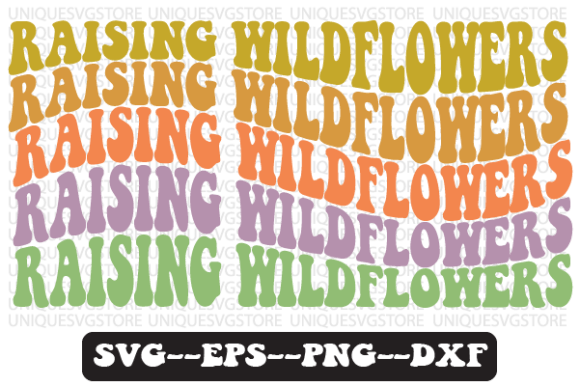
Reviewing the Raising Wildflowers Retro SVG
As a designer who spends half my life digitizing patterns and the other half testing them on actual fabric, I have learned to look past the glossy mockups. When I first opened the Raising Wildflowers Retro Svg Design, I was not just looking at a pretty image; I was evaluating its potential as a viable machine embroidery design for my current client projects. The initial impression is striking. The wavy, retro aesthetic carries a nostalgic warmth that feels incredibly current, tapping into the 70s revival trend without feeling dated. However, translating a digital graphic into thread requires a critical eye for structure, density, and placement.
First Impressions and Visual Personality
The mood of this piece is soft yet bold. The flowing lines suggest movement, which is excellent for creating visual interest on static items like tote bags or pillow covers. From a Graphics perspective, the balance between negative space and filled areas is promising. For an embroiderer, this is crucial. If a design is too dense, it puckers the fabric; if it is too sparse, the background shows through awkwardly. This design appears to have a rhythmic flow that could translate beautifully into a combination of satin stitch for the outlines and fill stitch for the floral elements, provided the digitization respects the original vector paths.
I immediately thought about how this would look on a natural linen tote bag design. The organic shapes of wildflowers pair naturally with textured fabrics. The retro vibe adds a layer of sophistication that elevates a simple canvas bag into a boutique-ready accessory. It is not just a flower; it is a statement piece that speaks to a customer who values handmade quality and vintage-inspired aesthetics.
Real-World Application: The Custom Sweatshirt Test
To truly evaluate the Raising Wildflowers Retro Svg Design, I imagined a specific real-life scenario. A local boutique owner approached me for a line of custom apparel focused on sustainable, slow-fashion principles. She wanted a design that felt personal and earthy. This retro wildflower motif fit the brief perfectly. I visualized placing it on the left chest of a heavyweight organic cotton sweatshirt.
In this context, the design’s scalability becomes key. On a large back print, the details might get lost if the stitch count is too low, but on a chest pocket area, the simplicity of the wavy lines ensures clarity. The embroidery file needs to maintain integrity when scaled down. I also considered how it would perform on a baby onesie. The soft, curving lines are gentle and appropriate for baby embroidery, avoiding sharp angles that might feel aggressive or look messy if the garment is washed frequently.
Navigating Fabric and Stitch Challenges
While the design is versatile, it is not without its challenges. Any experienced crafter knows that retro styles often rely on clean lines. When working with stretchy fabrics like jersey knits for t-shirts or tank tops, stability is paramount. Without the correct stabilizer, those wavy lines can distort during stitching, turning a crisp retro look into a wobbly mess. I recommend using a cut-away stabilizer for garments that will undergo frequent washing, such as hoodies and long-sleeve tees.
Another consideration is the thread colors. The retro aesthetic thrives on muted, earthy tones—mustards, rusts, sage greens, and creams. However, if you are stitching on dark fabric, you must ensure there is enough contrast. A light-colored thread on a navy hoodie will pop, but if the design includes fine details, you must check the stitch density. Too many overlapping stitches in a small area can cause thread breaks or bird nesting. I always advise running a test on scrap fabric of the same weight and texture before committing to the final finished product.
Curved surfaces, such as caps or mugs, present another hurdle. The Raising Wildflowers Retro Svg Design features horizontal waves that might warp if not hooped correctly on a curved cap. For embroidered patch creation, however, this design shines. Patches allow for dense stitching on a stable backing, ensuring every curve remains sharp and defined before being applied to the final item.
Commercial Viability for Etsy Sellers and Craft Businesses
For Etsy sellers and small shop owners, the appeal of this design lies in its versatility across the Crafts category. It is not limited to clothing. Imagine this design sublimated onto a ceramic mug or printed on wall art. The description mentions it is a printable PNG sublimation design, which expands its utility beyond the embroidery hoop. This dual-purpose nature makes it a valuable asset for digital product sellers who want to offer both physical and digital goods.
When creating printable mockup previews for your online store, this design performs well because it is recognizable even at thumbnail size. This aids in buyer engagement. Customers scrolling through hundreds of listings need to instantly grasp the vibe of the product. The clear, bold lines of this retro wildflower design communicate "vintage" and "nature" instantly, building trust and encouraging clicks.
However, commercial use requires diligence. Before listing items made with this digital embroidery file, you must confirm the licensing terms. Does the license allow for unlimited physical sales? Can you use it for digital prints? Never assume. Protecting your craft business means respecting intellectual property rights and ensuring your design assets are cleared for the intended use.
Practical Designer Notes for Best Results
To get the most out of this embroidery project, keep these practical tips in mind:
- Test on Scrap Fabric: Always stitch out a sample on the exact fabric type you plan to use. Check for puckering and registration issues.
- Check Contrast: View the design in black and white to ensure the details remain visible without color reliance. This helps in selecting high-contrast thread combinations.
- Hoop Size Matters: Ensure your hoop size accommodates the full design without needing to re-hoop, which can cause alignment errors.
- Stabilizer Selection: Match the stabilizer to the fabric weight. Heavy denim needs different support than lightweight rayon.
- Inspect Small Details: Zoom in on the digital file. Are there tiny gaps or overlapping nodes that might cause machine errors? Clean up the file if necessary.
In conclusion, the Raising Wildflowers Retro Svg Design is a strong contender for any maker looking to add a touch of nostalgic charm to their repertoire. Whether you are creating a personalized gift for a friend, stocking your small shop product lineup, or designing holiday embroidery pieces, this graphic offers the flexibility and visual appeal needed to succeed. Just remember that the magic lies not just in the download, but in the thoughtful execution of the stitch.